Understanding the gendered dynamics of migration, displacement and culture is central to promoting inclusive societies and peace. This research project brings together communities and scholars from South Asia and the Middle East in the use of innovative methods to provide knowledge for development.
Spanning several years, this research advances the delivery of Sustainable Development Goal 5 on gender equality; 16 on peace, justice and strong institutions; and the implementation of the Women, Peace and Security agenda.
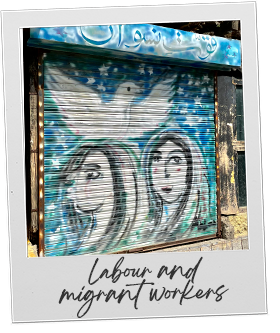
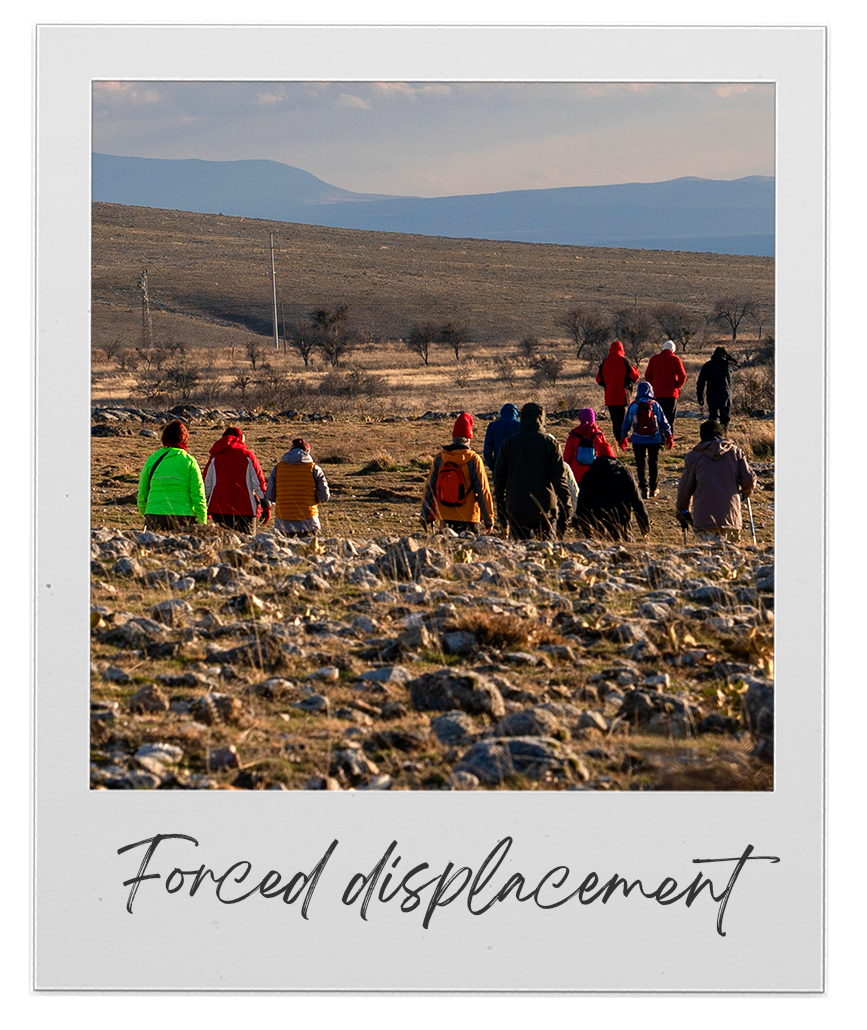
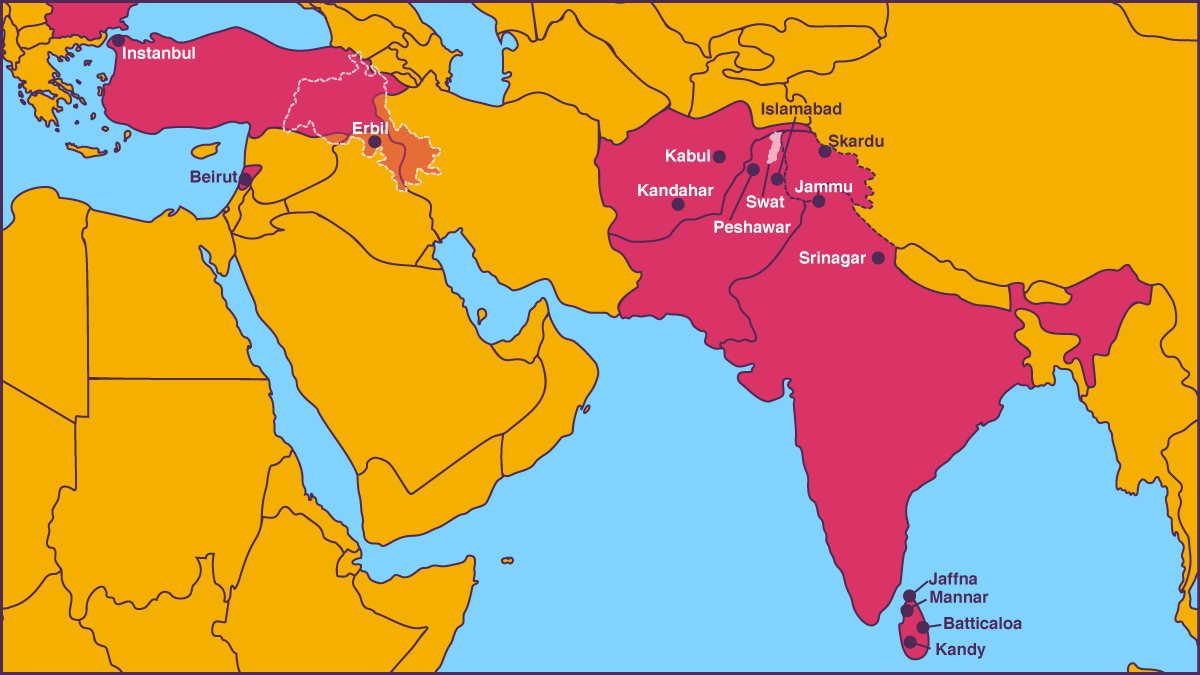
Migration and Displacement: The Migration and Displacement stream is organised around two premises: first, both conflict-induced displacement (internal and international) and migration in the post-conflict state are highly gendered; and second, the restructuring of the post-conflict state may give rise to competing tensions, including the creation of new opportunities and the exacerbation of ethnic, religious and gender-based divisions which deepen vulnerabilities.
For example, women and children are overrepresented in refugee populations and in many conflict-affected societies, women outnumber men as labour migrants, with child and adolescent girl migrants also increasingly present. Evidence from the Social Institutions and Gender Index (SIGI) suggests that women’s migration is particularly affected by socially discriminatory institutions. Gender discriminatory citizenship policies may also have an accrued impact on women and children due to displacement.
The research addresses several seemingly intractable challenges affecting migration, displacement and return which respond to the pursuit of gender justice. Though it is increasingly recognised that women and girls form a growing proportion of those who are displaced internally and internationally from conflict-affected areas, their needs and vulnerabilities are often not considered. Their return on their own or with families requires an acknowledgement of the complex and sometimes difficult reintegrating into communities and the development of new initiatives to help them utilise any economic resources, new cultural resources and know-how they have brought with them.
Transformation and Empowerment: The Transformation and Empowerment stream aimed to create impacts for conflict-affected populations and civil society groups. However, policies, transformation of societies, empowering populations and transition towards justice reform remains poorly aligned with development policies. The focus of T&E is on exploring the concepts of ‘transformative justice’ and ‘empowerment’ within conflict-affected societies, aiming to understand who is being empowered and how in these contexts, and the challenges faced by those seeking empowerment, both practically and institutionally, in multiple conflict and post-conflict societies. The work stream addresses key questions and challenges for achieving gender equality in post-conflict countries such as Sri Lanka, Iraq, Afghanistan, Colombia, Northern Ireland, Nepal, Uganda and Rwanda. Post-conflict societies face a myriad of challenges, including institutional fragility, political polarisation, divided communities, the impact of war on women’s rights, victim reparations, reconciliation, gender-based violence, new forms of violence, colonial legacies and the implementation of transitional justice mechanisms. The Hub’s work underscores the layered, intersectional and multidimensional nature of these issues, which may vary across countries and cultures, yet share similar challenges.
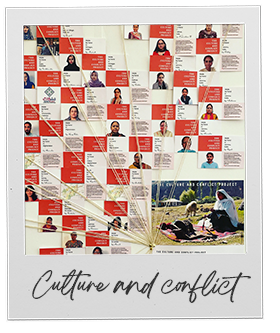
Working across four countries, Afghanistan, India, Pakistan and Sri Lanka, the Culture and Conflict Project investigates the value of culture, creativity and tacit knowledge to women in conflict settings, seeking to understand gendered economic exclusion and its relationship to peacebuilding, economic agency and empowerment. The project uses a cultural mapping methodology to explore how communities of women across different conflict contexts rely on uncoded tacit knowledge to rebuild their lives and to understand how cultural practices continue to exist and resist in these challenging contexts.
The project uses culturally relevant, socially significant practices of craft making as an entry point into discussions and dialogue about the conflict, its impact, and its legacy. It then transforms these into an action-oriented strategy that pivots practices of making towards economic development and employment focussed narratives linked to concepts of gender equity, employment, agency, and work within the informal sector. In phases the project built a large database of material culture practices, intergenerational knowledge, layering the dialogues on conflict, community fragmentation, and gender inequalities with peacebuilding approaches and a clear understanding of the value that cultural knowledge holds within the women of these nations. The project also built a commercial pathway through design training co-produced by women and a UK based Industry partner, that built sustainable income pathways through sales and exhibitions across four nations in two years. The project generated over £10,000 of income through sales of craft made goods, income that was invested by the women into their own creative businesses. Collectively these approaches inform us of the critical link between gendered knowledge, peacebuilding, and economic development through sustainable livelihoods.

Partners
University London College, UK
Association of War Affected Women, Sri Lanka
MOSAIC, Lebanon
Kadir Haas University, Turkey
Laajverd, Pakistan
Yakjah, India
American University Iraq
Paiman, Pakistan
Women Peace and Participation, Afghanistan